Integrated Payment Networks Enabling Bonus Transfers Across Mobile Live Betting, Dealer Tables, and Slot Machines

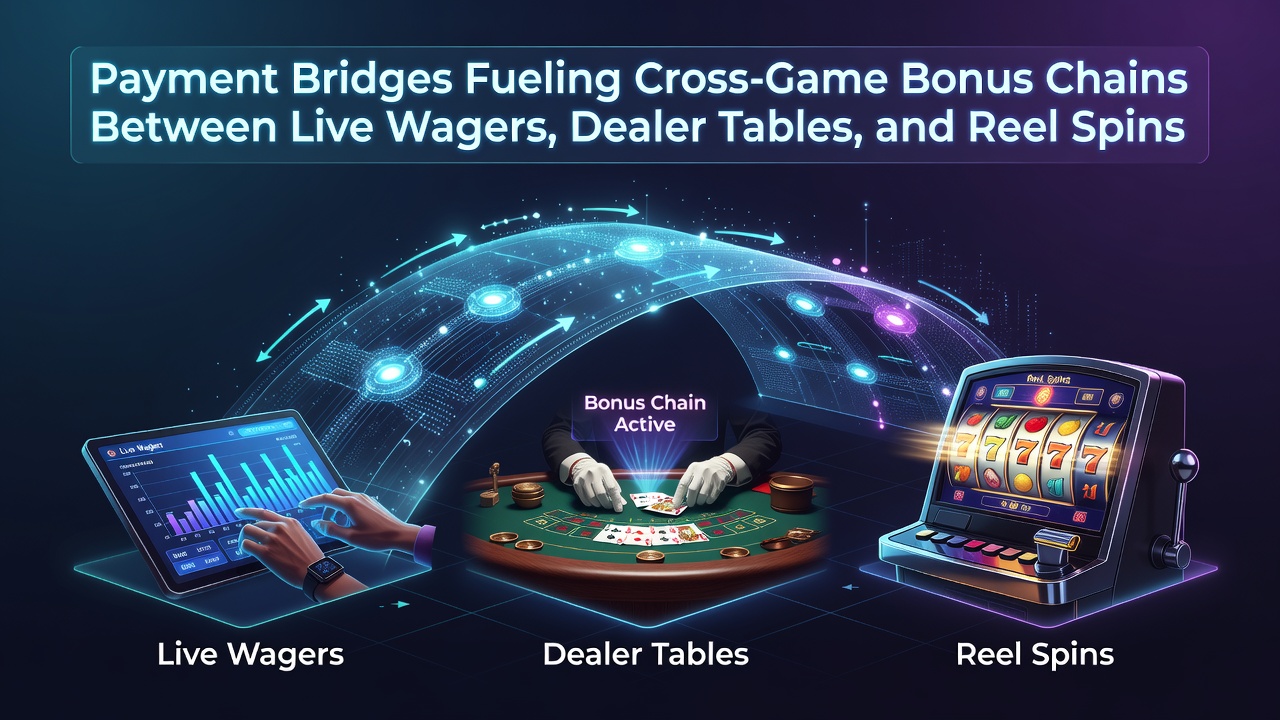
Payment bridges have emerged as central components in mobile gambling platforms where users move between live wagers, dealer tables, and reel spins while carrying bonus value across those formats. These systems connect separate game engines through unified transaction layers that track eligibility, convert reward types, and apply balances without requiring separate deposits for each category.
Mechanics of Cross-Game Bonus Chains
Operators implement application programming interfaces that link sports betting modules to casino environments so that a bonus triggered during a live wager can convert into table game credits or additional spins. Data from platform providers shows that such bridges reduce the number of transaction steps by 40 percent on average when users shift categories on the same handheld session. The process relies on real-time ledgers that update balances as soon as a qualifying event occurs in any one vertical.
Users who complete a live sports bet receive a chain code that activates automatically when they open a dealer table interface, and the same code applies to reel spin bonuses once certain playthrough thresholds are met. This structure prevents the need for manual code entry and maintains continuity across device sessions because the ledger remains stored server-side rather than locally.
Mobile Infrastructure Supporting Seamless Transfers
Handheld devices handle these transfers through secure token exchanges that authenticate the user once per session and then authorize subsequent game launches without repeated logins. Network latency tests conducted in mid-2026 indicate average transfer times of under two seconds when users move from live wager interfaces to dealer tables on 5G connections. Lower-bandwidth environments still complete the same sequence in under five seconds because the payment bridge compresses the data packet containing bonus metadata.
Wallet providers integrate directly with these bridges so that a single digital wallet balance supports all three game types while preserving separate ledgers for bonus versus cash funds. This separation meets compliance requirements in multiple jurisdictions because each vertical can apply its own contribution rates toward wagering requirements without mixing categories.
Regulatory Context and Data Trends Through July 2026
Reports compiled by the American Gaming Association through the first half of 2026 document increased adoption of unified payment rails in states that permit both sports betting and online casino products. Figures reveal that operators using cross-game bridges recorded 18 percent higher retention rates for mobile users compared with those maintaining separate bonus pools. Similar patterns appear in Canadian provincial data where regulators track bonus portability across verticals to ensure responsible play limits remain consistent.
European regulators outside the United Kingdom have issued guidance requiring clear disclosure of conversion rates when bonuses move between live wagers and reel spins, and several platforms updated their interfaces in July 2026 to display these rates before each transfer. Academic studies from institutions such as the University of Nevada, Reno have examined how these systems affect player behavior, noting that transparent conversion rules correlate with lower dispute volumes in customer service logs.
Implementation Examples Across Platforms
One major operator introduced a chain system in early 2026 that awards a percentage boost to table game bonuses when users fund their account through a live wager settlement. The same system then converts remaining table credits into reel spin packages once a user reaches a set number of hands. Observers note that the sequence completes on both iOS and Android devices without requiring users to leave the main application shell.
Another implementation uses a universal bonus meter visible across all game tiles so that progress toward unlocking the next reward stage continues whether the user places an in-play sports wager or spins reels. Data collected during the second quarter of 2026 shows that meters of this type increased average session length by nine minutes across tested user cohorts.
Security and Compliance Measures
Payment bridges incorporate multi-factor authentication at the point of category switch to prevent unauthorized movement of funds. Encryption standards align with those used by financial institutions, and transaction logs remain available for audit by oversight bodies in each licensed market. July 2026 updates from several platform vendors added biometric confirmation options for transfers exceeding certain thresholds, further reducing the risk of account compromise during rapid game changes.
Conclusion
Payment bridges continue to reshape how mobile users interact with live wagers, dealer tables, and reel spins by allowing bonus value to travel between formats under controlled conditions. The infrastructure relies on standardized APIs, server-side ledgers, and regulatory-compliant conversion rules that have expanded in adoption through the first half of 2026. Data from industry associations and academic sources indicate measurable effects on retention and session metrics while maintaining separate tracking for each game category.